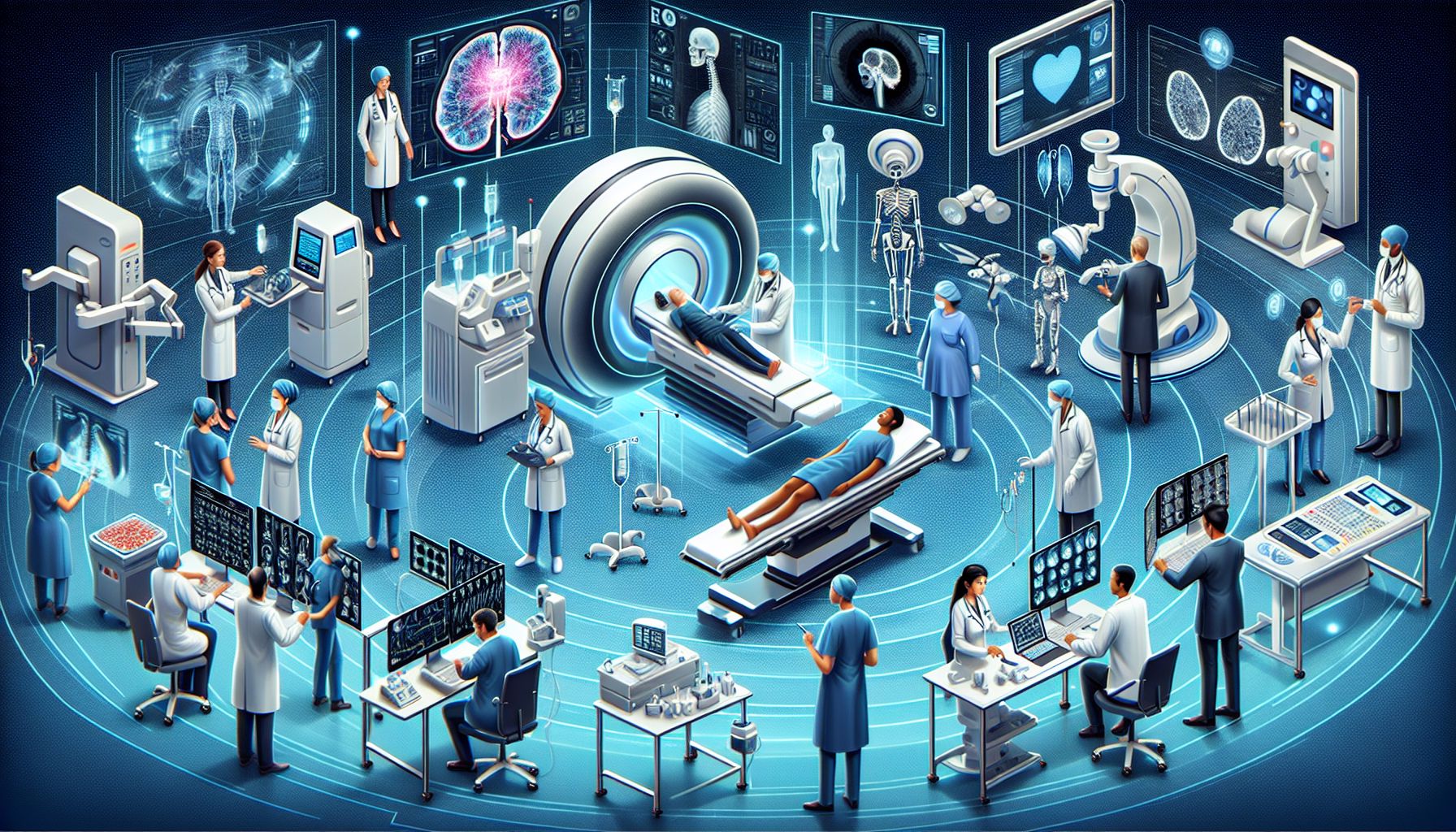
In the past couple of decades, medical technology has undergone a remarkable transformation. These advancements have revolutionized healthcare, making diagnoses more accurate, treatment more effective, and overall patient care more efficient. From cutting-edge equipment to groundbreaking research, let’s explore how medical technology has ushered in a new era of healthcare.
The Power of Medical Technology
Medical technology encompasses a wide range of tools, equipment, and procedures used to diagnose, monitor, and treat medical conditions. It plays a crucial role in improving patient outcomes and has opened up countless possibilities in the medical field. From simple devices like thermometers and blood pressure monitors to complex machines such as magnetic resonance imaging (MRI) scanners and surgical robots, medical technology is an integral part of modern healthcare.
Diagnosing with Precision
One of the significant benefits of medical technology lies in the realm of diagnostics. Advanced imaging techniques, such as computed tomography (CT) scans and positron emission tomography (PET) scans, provide detailed, accurate images of the body’s internal structures. These images are instrumental in identifying abnormalities, detecting diseases at early stages, and enabling physicians to make informed decisions regarding treatment strategies.
Enhancing Treatment Strategies
Medical technology has significantly improved treatment options for various medical conditions. For instance, the development of minimally invasive procedures, such as laparoscopy, has greatly reduced the need for invasive surgeries. This results in quicker recovery times, reduced complications, and improved patient comfort.
Additionally, robotic surgery has emerged as a groundbreaking development in medical technology. Surgeons can now perform complex procedures with greater accuracy and precision, minimizing the risks and improving surgical outcomes. Robotic surgical systems have revolutionized fields like urology, gynecology, and cardiovascular surgery.
Streamlined Patient Care
Advancements in medical technology have also streamlined patient care, enhancing overall efficiency in healthcare settings. Electronic health records (EHRs) have replaced the cumbersome paper-based systems, allowing for easy access, storage, and sharing of patient information. This ensures that healthcare providers have the necessary information at their fingertips, leading to faster, more informed decisions.
Moreover, telemedicine has gained significant popularity, particularly in remote and underserved areas. With telemedical tools, patients can access healthcare services through virtual consultations, reducing the need for physical visits and saving time and money for individuals and healthcare facilities alike.
The Future of Medical Technology
As technology continues to evolve at a rapid pace, the future of medical technology appears promising. Innovations such as nanotechnology, personalized medicine, and gene editing hold tremendous potential for transforming the healthcare landscape. These advancements aim to provide targeted interventions, tailor treatments to individual patients, and ultimately eradicate certain diseases.
The integration of artificial intelligence (AI) is another exciting prospect in medical technology. AI algorithms can analyze vast amounts of data, helping physicians make accurate diagnoses, predict outcomes, and design personalized treatment plans. Furthermore, robotics combined with AI may lead to the development of autonomous surgical systems, further advancing the field of surgery.
Conclusion
Medical technology has undoubtedly revolutionized healthcare, empowering healthcare providers, and improving patient outcomes. From state-of-the-art diagnostic tools to innovative treatment strategies, the advancements in medical technology have transformed the way we practice medicine. As technology continues to advance, the future of healthcare looks brighter than ever before. With ongoing research and development, we can expect even more groundbreaking innovations that will shape the future of medicine and improve the lives of millions.